In the wild wild web, brands want even more awareness, but awareness comes with a cost (different from what they pay Meta, Google, TikTok, etc.). The more present they are on the vast landscape of the internet, the more susceptible they are to being placed within various boundaries. Sometimes it's a good thing, other times it's a reason to recalibrate the communication strategy, but almost every time the situation is more nuanced than traditional metrics show. Besides NPS, share of voice, loyalty, equity, top of mind, and others, brands must consider a very important variable: people talk about them without asking for permission, consulting the brand book, or seeking a representative's opinion.
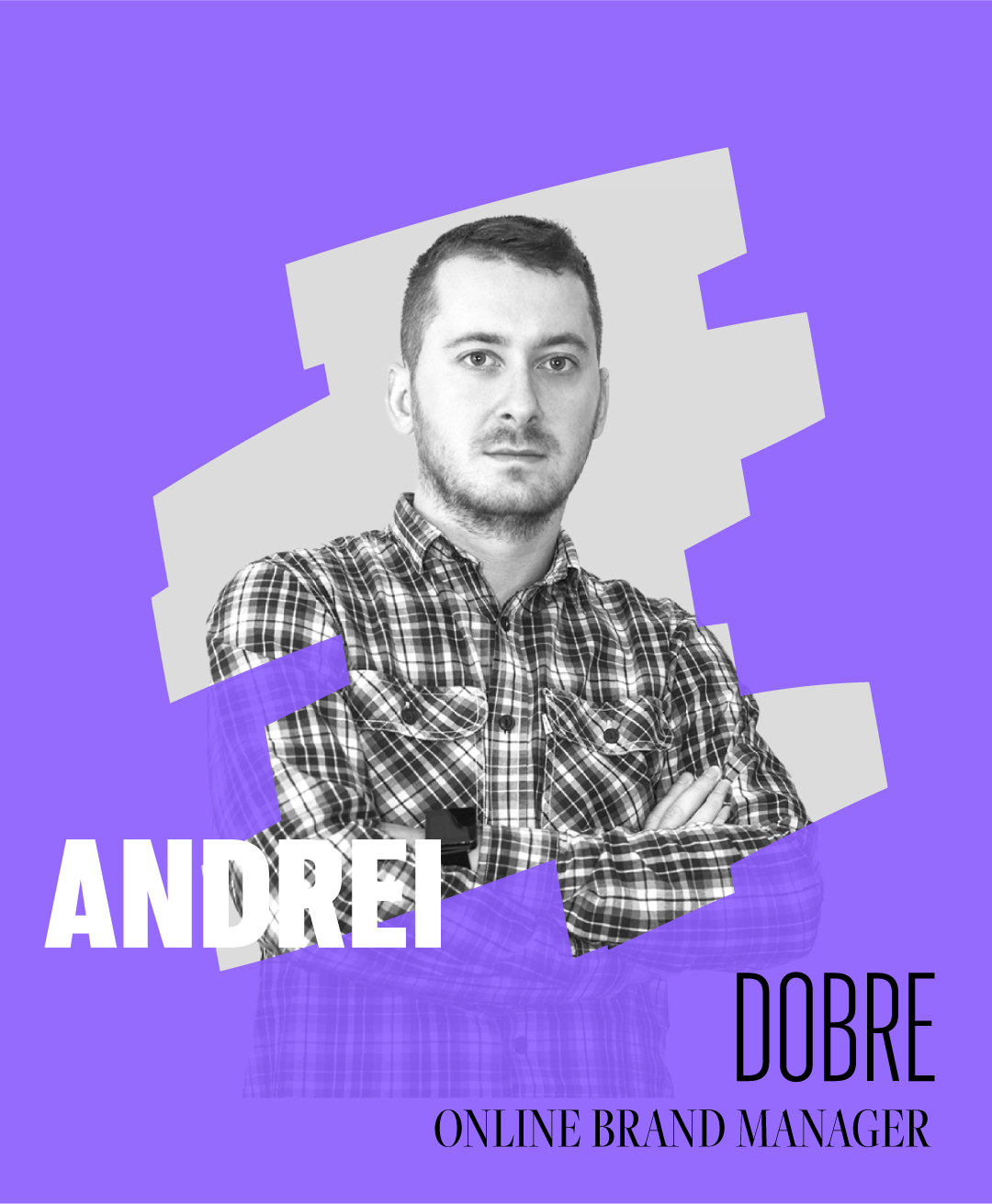
But amidst all this commotion, Mona Ursu, CEO of Brandfusion, discusses in an interview with IQads one absolutely unchanged aspect of the human-brand relationship: the need for trust.
„Walter Landor used to say that products are made in the factory, but brands are built in people's minds. And people's minds have operated on the same principles for tens of thousands of years. They seek consistency. They seek predictability. They seek someone they can rely on. Whatever the technology of the day, that doesn't change,” says Mona.
Branding: how has its definition adjusted/updated in recent years? What has remained unchanged and what new meanings has it acquired?
The brand has ceased to be a message controlled by the company and has become an ecosystem that, at most, the company can guide. Communities talk about the brand without asking or involving the company. Algorithms define it in its absence. Creators reinterpret it. And all this happens whether you are ready or not.
What has remained unchanged? The question the consumer or client asks themselves before choosing something. It's not a question about price or features. It's a question about trust: can I rely on you? They ask it on Google, they ask their friends, they ask it in Instagram comments. Only now they ask it in ten places at once and receive answers the company hasn't prepared.
In Romania, this takes on a special significance. We live in a fragile institutional context, where people have learned from experience to be skeptical. A consistent brand becomes, in its own way, a substitute for stability. For example, when I worked on the Alera brand or Depozit Virtual, the first thing I looked for wasn't a pretty message, but an honest answer to that question. "Partnerships, not transactions" or "Invest trust, gain value" are not slogans. They are promises that the business had to be ready to honor before uttering them.
What does the re/branding process look like in 2026?
It's harder than ever, and not for the reasons we might expect. It's not harder because the market is more complex or because there are more communication channels. It's harder because the person in front of you has read, listened, and seen things on LinkedIn. They've gone through at least three podcasts about storytelling. And that's precisely why they are more confused, not more informed.
We've ended up spending a significant part of each project with clients not building, but deconstructing beliefs borrowed from articles read hastily, superficially adopted from their industry, transformed into certainties without ever having been verified. For example, many entrepreneurs see that some large competitors, with a history in the industry, use acronyms or generic category names and conclude that this is the rule. They see that the entire category communicates in a certain tone and adopt it without questioning if it's truly relevant for them. They don't realize that what they are imitating is the result of decades of brand building and budgets they don't possess, not a recipe they can simply copy.
I experienced this recently in a naming project. We delivered bold, differentiating names, built on clear strategic logic. The client hesitated in their choice. His industry is full of acronyms with decades of history behind them, and he chose the safety of that familiar pattern instead of a name that could have made him unmistakable. He chose his peace of mind over brand differentiation. We couldn't convince him, and sometimes that's part of the pains of our profession. But I know that in a few years, when he feels the name no longer serves him, he will have to make the change. Only then it will be harder and more costly. The fear of choosing bold doesn't disappear if you choose safe. It's postponed.
And there's something else specific to Romanian entrepreneurship that we see repeatedly: entrepreneurs are in love with their brands, and that blinds them. It's not a flaw, it's a natural consequence of having built something from scratch. As research also shows, simple ownership of something increases its value in the eyes of the owner. This makes it extremely difficult to change a name, a brand color, and sometimes even a positioning that no longer serves the business at a certain point.
That's precisely why a good branding process always starts with listening, not with solutions. For example, at Adams Supplements, an internationally awarded rebranding project, the process began with in-depth interviews with real consumers, not to confirm what the client thought they knew about them, but precisely to discover what they didn't know. From those conversations emerged the positioning insight: pragmatic adults with demanding lifestyles take supplements not out of enthusiasm, but out of responsibility for their own health. A positioning that no initial brief had anticipated.
At Property Concept, the future Alera, strategic exploration revealed something the founder knew intuitively, but had never clearly articulated: that the company's differentiator wasn't its property portfolio, but its ability to transform an opaque and stressful process into a clear and predictable experience. That people weren't buying an apartment. They were buying the peace of mind that they weren't making a mistake.
How has the research aspect been updated – do we still start with archetypes, how much do we still lean towards aspirational positioning, and how important are the ideals of purpose and mission?
Archetypes are a delicate subject. They haven't disappeared, but they've been degraded. They've become a convenient language, a shortcut for internal conversations, and this has stripped them of their external differentiating power. When you have four brands in the same category declaring themselves The Hero and three declaring themselves The Rebel, you're nowhere. You're just one of seven.
But the deeper problem isn't choosing the wrong archetype. It's the fear of committing to a single idea. I've seen this in almost every project. Clients want to keep all their options open. They're more likely to accept a generic idea that promises nothing concrete but seems to "cover everything," rather than committing to something specific and risking a loss. Psychologically, this is perfectly understandable: loss aversion is twice as powerful as the excitement of a gain.
And yet, differentiation is precisely what creates a space no competitor can occupy. During the Isoskills rebranding, analyses showed that the IT market was oversaturated with identical promises of innovation and digital transformation. Visual identities were almost identical, built on generic technological symbols. The counter-intuitive direction was to leverage precisely what everyone else was ignoring: the human side of technology. Think human, build digital. An idea competitors left on the table precisely because it seemed too simple.
The aspirational hasn't disappeared; it has matured. People no longer believe in brands that promise to change the world if they don't also see how they're doing it. Purpose and mission remain important, but they function internally, as a compass for decisions. If they don't surface in observable behavior, they become a burden.
What role does intuition play in branding in 2026?
More than ever, but not in the way we might have expected.
Good intuition isn't a mystery. It's accumulated experience that rapidly processes patterns you can't immediately articulate with data. It's what tells you something is off with a direction, even if all the research figures seem to support it. It's what whispers that a client isn't ready for a certain truth, even if that truth is correct.
In a world where AI can generate dozens of "correct" visual directions in seconds, the intuition of a designer or strategist with considerable experience becomes more valuable. Because they know how to distinguish what is correct from what is relevant.
Experience tells us, for example, that for the Kindora brand, one of our projects, an aesthetic close to beauty isn't a decorative choice, but a precise cultural signal aimed at someone who wants to feel good in their own skin, not to take "medicine." Similarly, experience also tells us that for the Alera brand, the texture in the interior design wasn't an aesthetic whim, but a way to tell an anxious buyer: you're in good hands.
However, there's a real risk we need to be aware of: confusing intuition with personal preference. They are not the same thing. Good intuition is anchored in empathy for a real audience. Personal preference is anchored in one's own taste. This difference matters enormously when you're in front of a client and need to defend a direction you truly believe in.
Communication/distribution channels have become increasingly diversified (see the new generative engine optimization). What does a brand need today for its identity ecosystem to be adaptable to any context?
The simple answer is that you need a stable core of ideas and flexible visual elements.
The core of ideas means 3–5 anchor concepts that you recognize regardless of form or medium. These are the values and direction that remain constant regardless of context. If you can't articulate them clearly, you don't have a strategy; you have an aesthetic that won't survive a change in context.
Flexible visual elements mean a system: color, form, rhythm, typography, that works at any scale and in any format. From a favicon to OOH billboards, from a YouTube thumbnail to a ChatGPT-generated response. At Isoskills, the modular system based on a grid and radial forms allowed exactly that: the same recognizable identity from internal materials to exhibition environments. At Depozit Virtual, the symbol was built from the outset as a modular element, capable of functioning even in franchise models. At Alera, the same system had to simultaneously cover website, social media, and office branding – three contexts with their own visual logic, held together by the same identity.
Beyond the system, however, there's a deeper shift in mindset. The static 200-page brand book was written for a world where you controlled every touchpoint. Today, you no longer control. Instead, you can build a system that knows how to manage without you.
What are the identity differentiators? How does cultural context influence this?
The real differentiator is no longer visual execution. Execution has become a commodity. With today's tools, anyone can produce something that looks decent. The real differentiator is to speak from a clear position, with an unmistakable tone, to the right people, and to resist the temptation to be for everyone.
At Isoskills, visual differentiation came from a modular system built around a logo that radiates from a central point: man as the core of technology, in an IT market dominated by generic and cold technological symbols. At Kindora, the decision to adopt beauty and lifestyle aesthetics in a category visually dominated by pharmaceutical packaging was what set the brand apart from everything else. At Adams Supplements, the balance between the naturalness of ingredients and pharmaceutical precision was visually translated through its own packaging architecture built on exact geometry.
How is the increasingly popular trend of imperfect authenticity integrated into branding?
Imperfect authenticity isn't a trend. It's a reaction. It's what happens when people get tired of sterile perfection and start looking for something that feels human.
But there's a trap in responding to this reaction. Imperfect authenticity has started to be mimicked. Brands that add a vintage texture over an AI-generated logo and think they're becoming authentic. Messages deliberately written in the language of trendy social media expressions. Calculated imperfection is more dangerous than sincere perfection, and people feel it, even if they can't name it.
Where do you draw the line between flexibility and loss of identity?
It's a question I often receive, and to which I've arrived at a simple, practical answer: you can be flexible in form, not in beliefs.
You can look different on TikTok than you do on physical packaging. You can speak differently to an investor than you do to an end customer. But you cannot believe different things depending on who is listening.
What is the fate of the brand guide in 2026?
The classic guide is an artifact from another era. It was written for a world where execution took weeks, where you gave instructions to a printer who faithfully followed them. Today, instructions must work for a 20-year-old intern posting from their phone at 11 PM and for an AI that generates copy in 3 seconds, without asking anyone.
What replaces the guide isn't a longer, more detailed document. It's a more visible logic. Concrete examples: show what's right and why. Show what's wrong and why, because people learn more easily through contrast than through abstract rules.
For the Râureni rebranding project, the guide wasn't a rulebook, but a system built around a clear logic: the balance between authenticity and modernity. The visual system developed, applied from master packaging to the digital communication platform, had to function coherently regardless of who applied it and in what context. The objective was the same as in any well-constructed project: for the team to be autonomous without losing coherence. The proof that it worked is simple and visible: more than 15 years after the rebranding, Râureni's communication maintains the visual direction set then and manages to evolve within it, not outside of it. This is the real test of a well-built system, not how it looks on delivery day, but what happens to it over time.
How is people's relationship with brands changing in 2026? What have you observed in the habits of new generations?
New generations no longer have patience for the gap between what a brand promises and what it delivers, and they have the tools to make it visible immediately. But that doesn't mean they no longer form attachments. It means they attach differently: more selectively, more deeply, harder to win, and much harder to lose once won.
What I've observed is that brands are increasingly judged in moments of pressure, not in image campaigns. What you do when things go wrong. How you react when you make a mistake. Whether you admit it or hide. These are the moments that build or destroy trust capital, not the Christmas commercial.
What do people want from a brand in 2026?
They want to know that the brand exists for something specific, not for everything at once. They want clarity. They want to be treated as real people, not as an audience segment you speak to differently depending on the channel you catch them on.
At DEIO, we built a brand that doesn't try to impress with technological complexity, but with the exact opposite: simplicity and clarity in a category that unnecessarily complicates itself. At Alera, the same principle applies to real estate: people don't want to become investment experts; they want a partner who makes the process understandable and safe for them. In 2026, utility is the entry ticket. What keeps you in the game is whether the brand means something beyond what it sells.
What will never change in the relationship between a person and a brand?
The need for trust. Everything else changes: platforms, formats, algorithms, generations, visual languages. The question remains the same.
Walter Landor said that products are made in the factory, but brands are built in people's minds. And people's minds have operated on the same principles for tens of thousands of years. They seek consistency. They seek predictability. They seek someone they can rely on. Whatever the technology of the day, that doesn't change.
From observations of current consumer behavior: what scares you, what gives you hope?
The homogenization scares me. Not as a theoretical risk, but as an already visible reality. When everyone uses the same tools, all brands tend to look alike. A regression to the mean on an industrial scale. Identical visual identities, generated in seconds. Texts that sound like an AI-translated brief, not like people who actually thought something through. Entire categories where you can't tell who's speaking if you cover the logo.
It gives me hope that more and more clients understand this after experiencing it themselves. They generated a logo, saw it looked decent, generated another, and saw it looked similar. And then they understood something you can't explain beforehand: that execution is the easiest part. That the Adams Supplements rebranding won at the Transform Awards Europe not because it produced something technically spectacular, but because it started from a real understanding of the consumer. That Veruvis won at the REBRAND 100® Global Awards not because the identity was beautiful, but because it solved a concrete problem. Those judgments don't come from a prompt.
How much control does a brand actually have over its own image?
It depends on what you mean by control. Over the brand narrative, less than we might think. It's built in conversations the brand isn't invited to, in unsolicited reviews, in content generated by others about it, sometimes without the brand even knowing it's happening. Over the perception built over time, more than it fears. You can't control what people say about you, but you can control what arguments you give them to say it. And that, over time, is the only control that truly matters.
What has AI brought to branding?
It has brought speed and volume. It has compressed research phases that used to take weeks. It has democratized visual production in ways we didn't anticipate almost two years ago. And through all this, it has paradoxically raised the stakes for everything that cannot be automated: cultural judgment, empathy for the real audience, the courage to choose a direction and stick with it.
However, there's a trap in this democratization. I've seen the "I can do that with AI too" mentality eroding the understanding of the value of the real process. It's no one's fault in particular because we live in an era of business-driven efficiency, and when everyone talks about the power of AI, it's easy to believe that an expensive rebranding can be replaced with two subscriptions and a bit of ChatGPT.
But AI doesn't know that for Isoskills, it was precisely the human element that was the differentiator in an IT market saturated with generic technological identities. It doesn't know that for Alera, the texture in the interior design was a precise cultural signal addressed to someone making the most important financial decision of their life. It doesn't know that for Kindora, beauty aesthetics were the key to entering the consumer's life, not a decorative preference. Those judgments come from years of understanding people. Not from processing patterns.
Do you feel the pressure to translate branding into business metrics? How do you manage it?
I feel it, and I believe it's healthy. Branding cannot endlessly exist in the realm of intangible beauty. The problem isn't that we're asked for metrics, but that often the metrics are poorly defined: awareness without conversion context, Net Promoter Score without context about who is answering the questions and why, share of voice unrelated to what's actually happening in the category.
The way we manage this is simple, but it requires courage from both sides: we structure the conversation about metrics from the very first brief. What changes in the business if the brand works? That's the metric that matters.
How has the role of branding agencies been redefined in a world where anyone can generate brand identities?
The role has shifted from the tangible to thinking. And this is both an opportunity and a challenge, because thinking is harder to evaluate than a visual identity on a mood board.
Anyone can generate a visual identity. Few can evaluate if it's relevant, if it's distinctive within its category, if it solves a real business problem, or if it will still be effective in a few years. Few have the courage and knowledge to tell a client that their initial premises are flawed.
What does a strong brand mean in 2026?
A strong brand in 2026 is one you recognize without a logo, understand without explanation, and seek out again after the first experience. It's a brand that knows what it isn't and maintains that clarity even under pressure to be for everyone.
Alera doesn't compete with all real estate players. It competes for the client who wants to understand what they're doing with their money and have someone by their side throughout the process. DEIO doesn't compete with all IT providers. It competes for the company that doesn't want to manage technology, but to use it. Isoskills doesn't compete with all IT outsourcing firms. It competes for the client who wants a partner to think alongside them, not a vendor to simply execute for them.
This clarity of positioning is what makes a brand strong. Not visibility. Not budget. Not tools. Clarity. And it's built through deliberate decisions, repeated over time, anchored in a real understanding of the people you're addressing. This has always been the hard work in branding. And it will remain so.